
Greta Gerwig's Barbie made $1.4 billion dollars and convinced Hollywood she could do anything.
Now she's bringing that same vision to one of the most sacred stories in Christian literature.
The casting decision she just made has pastors accusing her of rewriting Christ himself.
Why Greta Gerwig Chose Meryl Streep to Voice Aslan
Gerwig chose Meryl Streep to voice Aslan, the lion Christ-figure at the center of C.S. Lewis's Chronicles of Narnia, in a $280 million Netflix adaptation of The Magician's Nephew.
She told Empire magazine she wanted someone with "gravitas" – an actor profound without being pretentious, old enough to carry real wisdom, yet still capable of a child's sense of wonder.
Not once in that carefully crafted answer did she mention the one quality Lewis cared about most: faithfulness to who Aslan actually is.
Lewis was explicit about this.
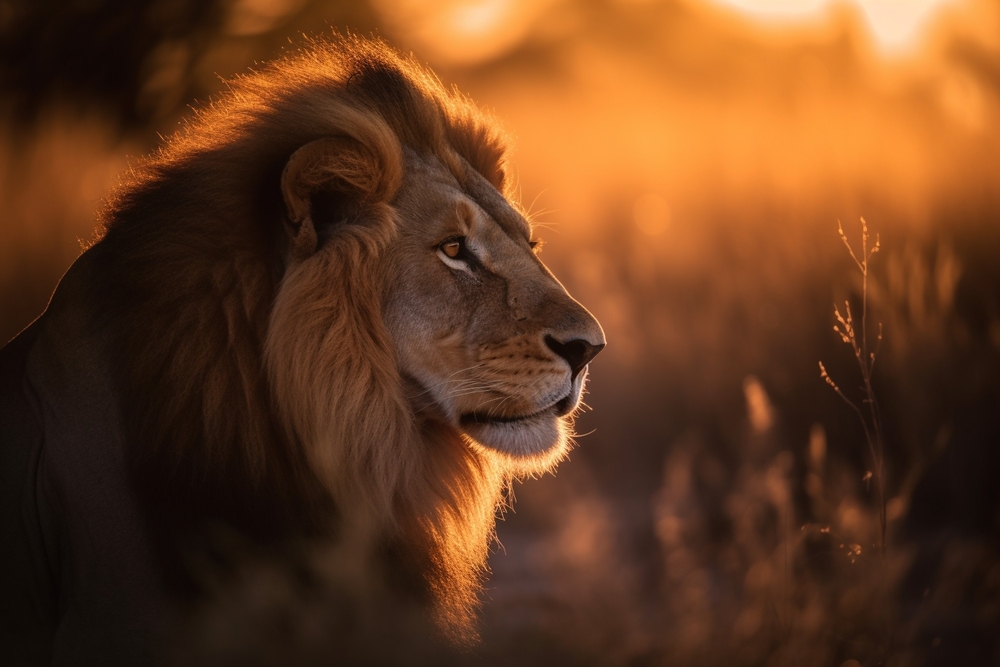
Lewis called Aslan his real answer to an imaginative question: if Christ had entered a fantasy world in the flesh, what form would He take?
His answer was concrete, not abstract.
And male.
Gerwig spent years studying this source material, signed a deal with Netflix after Barbie's billion-dollar run, and then decided the first thing Narnia needed was her feminist correction of Lewis's Christ figure.
Texas pastor L. David Fairchild said Gerwig was handed "one of the most beloved works of Christian fiction in the 20th century."
Then, in his view, she decided even the central figure needed her own personal rewrite.
He called the decision breathtakingly self-important.
He's right.
Netflix Bet 280 Million Dollars on Narnia and Gerwig's Vision
Here is the number that matters: $280 million.
That is what Netflix committed to a director whose most ideologically revealing film featured a patriarchy-smashing Barbie, a bumbling Ken, and a storyline that treated traditional masculinity as the root of all evil.
Gerwig, raised a Unitarian Universalist, has drawn widespread praise from critics for turning Barbie into a feminist statement, and she cited David Bowie – a man famous for gender-bending performance art – as a primary creative inspiration for her Narnia adaptation.
That last detail is not incidental.
It is the announcement of her real intentions.
She is not honoring C.S. Lewis.
She is replacing him.
Lutheran commentator Liam McCollum pointed out the irony: Lewis himself wrote a storyline about a false Aslan in the final Narnia book.
McCollum's warning was blunt – whatever Gerwig's version becomes, it will owe more to today's politics than to the Christian vision Lewis actually wrote.
Hollywood has tried this before and paid for it.
Ghostbusters gender-swapped its iconic cast, made $229 million against massive expectations, and killed the franchise.
Disney scrubbed the Christian themes from A Wrinkle in Time and watched it crater at the box office.
Pixar buried LGBT storylines in Lightyear and lost over $100 million.
The pattern is not a coincidence.
When Hollywood takes a beloved story with a devoted audience and uses it to deliver an ideological message that audience explicitly rejects, that audience simply does not show up.
Netflix is scheduled to open this film in theaters on February 12, 2027 – Super Bowl weekend – betting that a 49-day theatrical exclusivity window will let them recover part of that $280 million before the film hits streaming.
That is a very expensive gamble on the patience of Christian audiences.
What Casting Meryl Streep as Aslan Actually Changed in Narnia
The outrage here is not about Meryl Streep's acting ability.
Nobody disputes that Streep is one of the finest performers alive.
The outrage is about what Gerwig did to the theological architecture Lewis spent decades building.
Lewis said it himself: "He would become a Talking Beast there, as He became a man here."
That line settles the question Gerwig's press tour never bothered to answer.
Jenna Ellis, evangelical radio host, called Gerwig's choice exactly what it is – "profaning Christ with the divine feminine."
Evangelical influencer Jackie Chea said Gerwig is "trying to turn Jesus into a feminist statement."
That is precisely what happened.
Gerwig had every right to make any original film she wanted.
She did not have the right to walk into one of the most beloved works of Christian literature, carve out its theological heart, and replace it with her ideology – not without consequences.
Christians built this franchise.
Christians bought the books.
Christians filled the theaters in 2005 when the first Narnia film – faithful to Lewis – made $745 million worldwide.
Netflix gave Gerwig those Christians' money and told her to go make them a movie.
She made them a statement instead.
The $280 million receipt arrives February 2027.
Sources:
- Eric Williams, "Narnia film's female Aslan is profane, say evangelicals," The Telegraph, September 20, 2026.
- "Meryl Streep as Aslan in 'The Magician's Nephew' sparks Christian backlash: 'Creative vandalism,'" Christian Post, September 18, 2026.
- "Meryl Streep's Aslan Casting Ignites Christian Fury Over Greta Gerwig's 'Narnia: The Magician's Nephew,'" JubileeCast, September 19, 2026.
- "Director Confirms Ways Netflix Is Butchering Beloved Christian Classic 'Chronicles of Narnia,'" Western Journal, September 18, 2026.
- "Greta Gerwig's Narnia Touted As One Of Netflix's Most Expensive Films Ever With $280M Budget," Outlook India, August 2026.
- "C.S. Lewis Knew the Gospel Power of Narnia – But Netflix Is Rewriting It," Movie Guide, April 2025.
- "Everything We Know About The Netflix Narnia Adaptation Is A Travesty," Evangelical Dark Web, September 20, 2026.
- Greta Gerwig, Wikipedia biography (Unitarian Universalist upbringing), retrieved September 2026.
Related posts:

 Jeremy Boreing Just Beat HBO and Hollywood Has No Idea What Hit Them
 Art Garfunkel Picked the Worst Possible Week to Attack Trump’s Venezuela Win
 El-Sayed Got Asked About Hasan Piker Three Times on National TV and Refused to Say His Name


